Fairway to Green’s Kelly Okun wanted to dig more into her dominance. Is there anything she does while playing that helps her maintain her number one spot? Does how she was raised play a role? Are there other factors not normally considered?
The Augusta National Women’s Amateur was the perfect place to observe her play. It’s one of the most competitive events for amateurs in the world, and she was guaranteed to be surrounded by the best of the best.
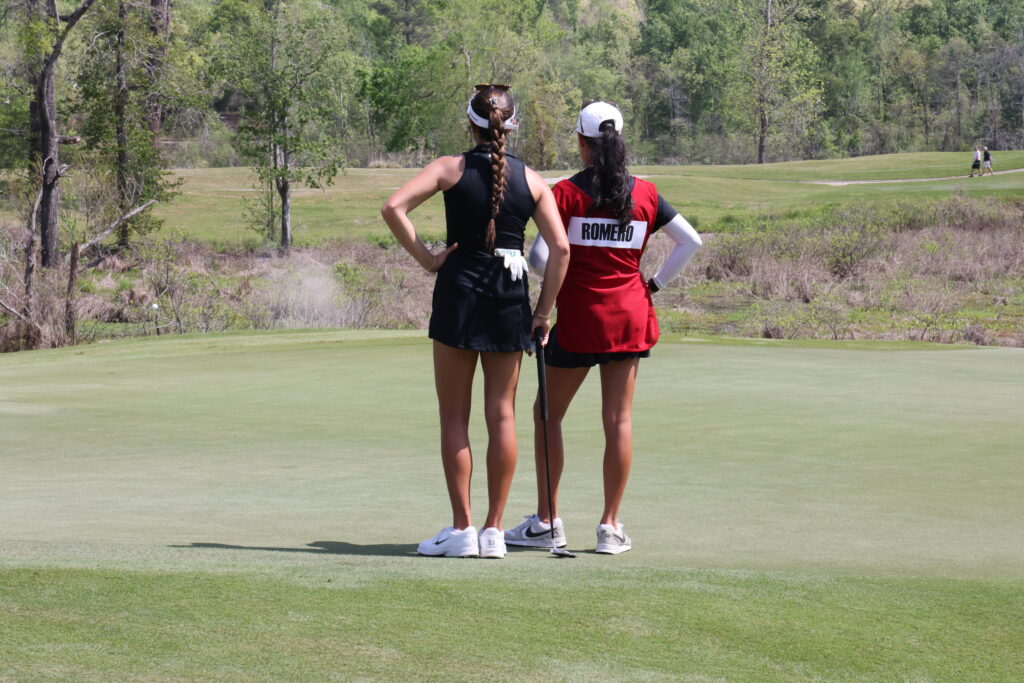
For the first and second rounds, Romero was paired with Andrea Revuelta of Spain and Stanford and Eila Galitsky of Thailand and the University of South Carolina. Galitsky had a tough start in round one, shooting 74 (+2), while Revuelta’s 66 (-6) had her tied for second place. Romero had shot 70 (-2), enough to keep her in the middle of the group projected to make the cut the next day.
Okun walked all 18 holes on Day 2 with this group and was reminded how different a round could look than what’s noted on a scorecard. Romero and Galitsky both shot 70 (-2) the second day, but their rounds were quite different. Revuelta had some nice saves herself that allowed her to shoot 72 (E) her second round; she went on to finish in solo second this week.
Ultimately, Romero made the cut and finished T4 after shooting a 4-under-68 at Augusta National on Saturday.
What’s the competitive edge that Romero has that allows her to consistently play so well? Four categories appeared throughout the day:
- Technical quality
- Mental strategy
- Personal motivation
- Support system
Kiara Romero’s Golf Swing and Short Game Analysis
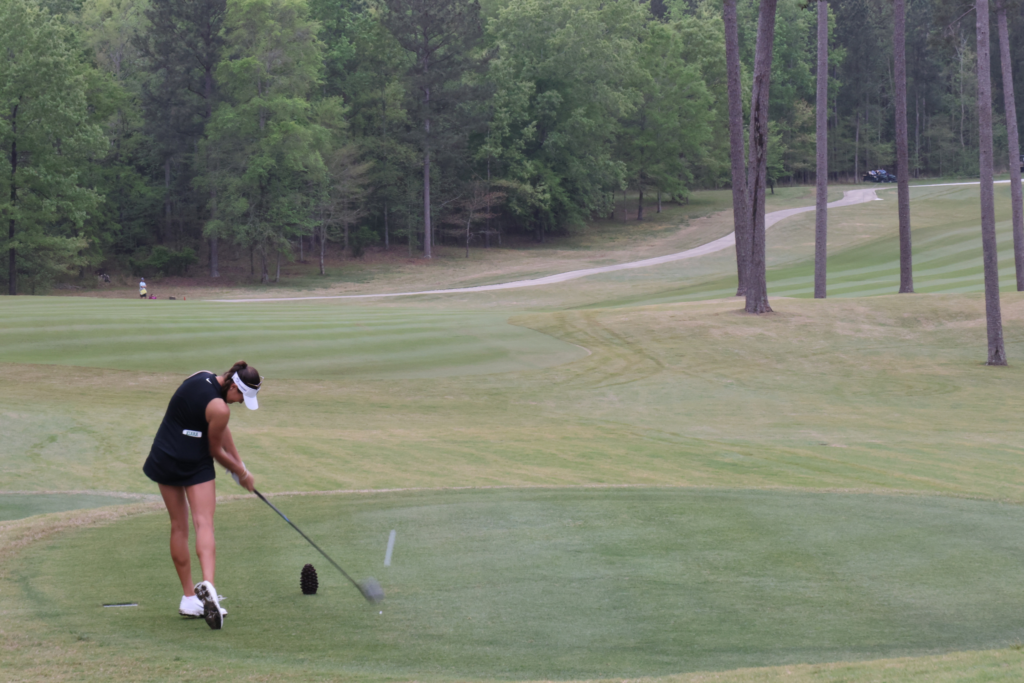
While Romero isn’t the longest driver, she certainly isn’t the shortest and very well may be one of the most consistent. Okun saw her hit all 7 fairways on her back nine, missing only two on the front – those resulted in two of her bogeys that day. One drive hit a tree and left her with a long approach shot while the other didn’t set her up properly to take advantage of a par 5. However, she still hit 86% of her fairways that day.
Romero came into ANWA knowing her ball-striking was in a strong place. “Everything is kind of coming together and working really well,” she said. “The most important thing is my ball-striking is really on point right now.”
She hit 15 – or 83% of – greens in regulation. Two missed greens resulted from her two missed fairways on the front nine, and she miss-hit a par-3 tee shot on the back nine that landed just short of the green and rolled back into the water for a penalty that led to a double-bogey.
While Romero didn’t necessarily need to demonstrate her chipping or bunker game too often because she hit so many greens, she did take advantage of those honed skills on the three other par 5s to give her better chances of birdie; she capitalized on all three. Overall, she had 30 putts, which is reasonable given how rarely she needed to scramble.
Taking a higher-level view of the scorecard, there truly was a lot going on. Okun can’t say for sure if that’s normal for her gameplay, but two takeaways stood out:
- Romero’s solid ball-striking was the main driver in her bogey avoidance. When the tee shot missed her target, bogeys (or worse) ensued. Otherwise, she set herself up nicely on 14 of the 18 holes.
- Romero can birdie. She had 7 birdies on the scorecard that day. Romero had a 47% chance of making birdie on every green she hit in regulation. For comparison, Galitsky, who shot the same score, converted 5 of 11 greens in regulation to birdies – a 45% rate – and Revuelta, who admitted she had a rough day, converted 4 of 12, or 33%, into birdies.
Another way to look at it is, every time Romero hit a fairway – which is quite often – she made par or better. That’s not to say her short game isn’t a huge asset – it is for making birdies almost 50% of the time she hits a green. But it does go to show that removing penalties off the tee is just as critical as sinking putts.
Kiara Romero’s Mental Game: An Observation
With all the hard work these women put into their golf games behind the scenes, training the brain could be the difference in being world number one or 100.
Okun saw three distinct areas of strength in Romero’s mental game. The first is her course management. “I think I’m just being a little bit smarter while I’m out there and really focusing on the right spots,” said Romero. “My game has really matured over the past few years compared to junior golf when I would just see the ball and hit the ball. I’ve learned a lot from the last few years.”
An example of this enhanced play includes when she hit the tree off the tee on hole 13. She had the right balance of aggressiveness and wisdom when she chose to hit her fairway wood as close to the green as she could. There was a bunker in play, but if she had confidence in her sand game – which she was 1/1 that day – that wasn’t the riskiest part of that shot. It was threading through the trees near where her ball landed. However, she found a clear lane and gave herself her best shot at saving par with that approach strategy.
The second area that stood out to Okun was her mental grit. The entire round, it was almost impossible to tell how Romero was feeling. Her composure was calm and collected, and while she may have been disappointed with a few of her putts not dropping, spectators didn’t see it. Instead, she could also be seen laughing with her older sister on the bag, Kaleiya, and throwing her ball up and down while walking to the next tee shot; both of these can be seen as signs of relaxing and staying present as a way to enhance focus or simply have a little fun.
Romero also stuck to her pre-shot routine every time, no matter if the putt was three feet or 30. Even though some trouble in the group led to them being behind pace, she still took her time and maintained her rhythm.
If she needed to walk the 40 yards up to the green to best choose a landing spot for her chip, that’s what she did. If she didn’t feel confident over a tricky putt, she stepped back, recentered herself and then hit the ball. There’s a fine balance to strike between self-advocacy – internally and externally – and pace of play, and Romero found it.
The last area to note is Romero’s commitment to the basics. Without doing those tasks well – like eating consistently and staying hydrated with electrolytes – her body wouldn’t be in a position to perform at its best. Those are the little details that can make all the difference, and they’re usually the easiest changes to make.
Kiara Romero’s Personal Motivation
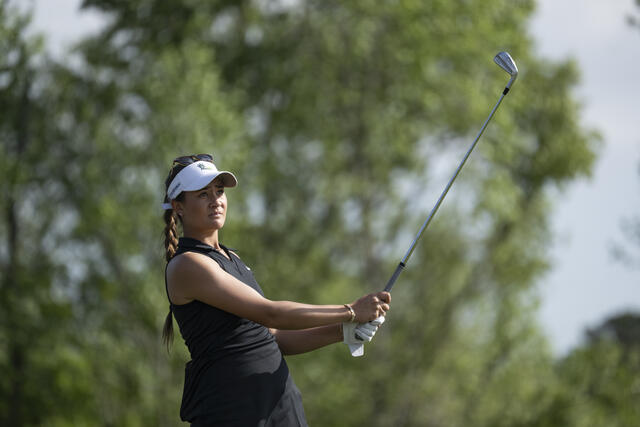
Okun had a chance to chat with Romero after her round, asking how she managed to climb to and maintain her number one position.
Romero said, “ Honestly, I think growing up with two older siblings and just kind of being the youngest of the three and always chasing them growing up and just trying to get to their level. You know, obviously the youngest isn’t as strong and as good as the older siblings, so I think, the competitive edge that I got kind of came from that and all of us like playing the same sport growing up.”
Many players in the field this week have commented on how competitiveness is something they’re born with, and Romero is no different. With so many winning siblings on the LPGA Tour alone, like Nelly and Jessica Korda and Chisato and Akie Iwai to name a couple, Romero may be on to something. Her sister just debuted on the Epson Tour and her brother, Kyreece, is also playing at Oregon. There’s nothing sweeter than beating your sibling at their own game.
Kiara Romero’s Support Systems: The Key?
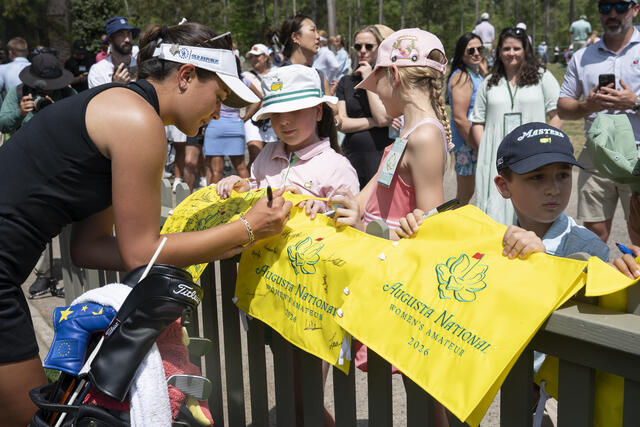
Romero has had two strong support systems present throughout her amateur golf journey: her family and her college coach. Perhaps it’s not lonely at the top.
Her father, Rick Romero, commended Romero for her hard work and love of the game, agreeing with Romero that her game has transformed over the last year and a half. “She’s kind of had a change in perspective and a change in maturity,” said her father. “It’s kind of allowed her to kind of play freely and kind of accept this role as number one and not think it’s a big deal. She says all these girls out here should be number one, you know, and she kind of downplays it.
“We’re a super close family,” he continued. “She’s super tight with her siblings, so I think all that combined has allowed her to get to that one spot and keep it.”
When Okun asked Romero’s dad how Oregon has supported her growth, he immediately responded with, “Coach Derek Radley. That’s a hundred percent it. He’s the reason she’s there. You know, he’s the reason she went there and he’s, you know, in my opinion, the best coach in college, for sure.”
While you can’t choose your family, you can choose your college coach, and it’s likely one of the most important decisions of your golf career. While there’s advice supporting and discouraging picking a program specifically for a coach (the negative being that the coach could leave so it’s important to believe the university is the right fit as well), the recruiting process has evolved to put more of an emphasis on coaches and recruits getting to know each other beyond the scoring averages, and the transfer portal has made following your favorite coach a more realistic option if needed.
There’s no right answer, but it’s clear that the right college coach can positively impact your game development, your team’s culture and your overall college experience.
Romero’s golf journey is an inspiration. Not only has her game and mental grit evolved over the years, but she has also highlighted what may be the most important part of playing well: surrounding yourself with the right people.